
Introduction
If you’ve bought tickets to a football game, a concert, or a major arena event in the past few years, you’ve probably run into a rule you didn’t expect: no regular purses or backpacks allowed. Instead, many stadiums, arenas, and concert venues now require attendees to carry their belongings in a clear, see-through bag. For first-time event-goers, this can feel confusing or even a little inconvenient. For seasoned fans, it’s become just another part of packing for game day.
Clear stadium bags — sometimes called clear purses, transparent crossbody bags, or stadium-approved totes — were designed specifically to meet these new venue requirements while still giving people a practical, comfortable way to carry their essentials. Rather than being a passing trend, they’ve become a staple accessory for anyone who regularly attends live events.
This guide walks through what clear stadium bags actually are, the features worth paying attention to, how people use them beyond just games and concerts, who tends to find them most useful, and what to think about before choosing one. Whether you’re buying your first clear bag or replacing an old one, understanding the category will help you make a more informed decision.
Why Clear Bags Became a Venue Requirement
Before diving into the product itself, it helps to understand the “why” behind clear bag policies, since this context shapes almost every design decision manufacturers make.
Over the last decade, major sports leagues — including the NFL, NCAA football programs, and many professional soccer, baseball, and hockey organizations — adopted clear bag policies as part of broader venue security measures. Concert promoters and arena operators followed suit. The idea is straightforward: a transparent bag allows security staff to visually inspect contents quickly during entry, reducing bottlenecks at gates while also making it easier to spot prohibited items without needing to search through opaque bags by hand.
For attendees, this means that even if you own a beautiful leather tote or a favorite backpack, it likely won’t be allowed past the gate unless it meets the venue’s size and material guidelines. That’s where purpose-built clear bags come in — they’re made from the start to satisfy these rules, so you’re not scrambling to find a compliant option on event day.
Key Features to Understand
Clear stadium bags vary somewhat between brands and models, but most share a set of common characteristics. Knowing what these features mean in practice can help you evaluate any specific listing more effectively.
Transparent Material Construction
The defining feature is, of course, transparency. Most clear bags are made from PVC, vinyl, or a similar flexible plastic material. This isn’t just about looking “clear” from a distance — venue staff generally require that contents be easily visible from multiple angles, so the quality and clarity of the material matters. Lower-quality plastic can appear cloudy or develop a yellowish tint over time, especially with repeated folding or sun exposure, while sturdier material tends to stay clearer and more durable through repeated use.
Crossbody or Shoulder Strap Design
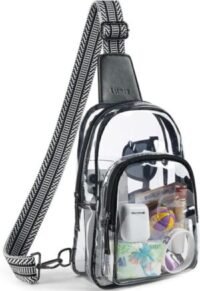
Many clear bags marketed toward women are built in a crossbody or shoulder-strap style rather than a handheld clutch or tote format. This is a practical choice for event environments: crowded concourses, standing sections, and long walks from parking lots to gates all make hands-free carrying more convenient. A crossbody strap also keeps the bag secured against the body, which can be reassuring in dense crowds.
Strap details worth noting include:
- Whether the strap is adjustable in length
- Whether it’s removable (useful if you want to switch between crossbody and handheld carry)
- The strap material — some are the same PVC as the bag, others use fabric or faux leather for added comfort
Size and Capacity
Most major sports leagues that enforce clear bag policies specify a maximum size, commonly around 12 inches by 6 inches by 12 inches, though exact dimensions vary by venue and league. Reputable clear bag products are typically designed to fall within or close to these common size guidelines, but this is one area where it pays to double-check both the product listing and the specific venue’s current policy before attending an event, since rules can change season to season.
Inside the size constraint, capacity still matters. A well-designed clear bag makes efficient use of its interior space, often including:
- A main compartment for larger items (phone, wallet, small umbrella, program)
- Interior or exterior pockets for smaller items like keys, lip balm, or hand sanitizer
- Sometimes a zippered pocket for slightly more private storage, even though the bag itself is transparent
Closure Type
Zippers are the most common closure for clear stadium bags, offering more security than a simple snap or magnetic closure. A secure zipper matters more than people initially expect — in a crowded stadium environment, an open-top bag can make it easier for items to fall out or, less commonly, for someone to reach in. A full zip closure across the top of the bag is generally considered a more secure and practical option.
Hardware and Finishing Details
Small details often separate a basic clear bag from a more thoughtfully designed one:
- Reinforced stitching at stress points, particularly where the strap attaches to the body of the bag
- Metal or plastic hardware for strap adjustment and clasps
- Edge binding or trim, which can help prevent the raw edges of PVC material from cracking or fraying over time
- A flat or gusseted bottom, which allows the bag to stand upright rather than collapsing when set down
How Clear Stadium Bags Can Be Used
While the name suggests a narrow use case, clear bags have found their way into a surprisingly wide range of situations beyond football Saturdays.
Sporting Events
This is the most obvious use case. NFL, college football, MLB, NBA, and NHL venues across the country have adopted clear bag policies, and a well-fitted clear crossbody bag lets fans carry essentials — phone, keys, cash or cards, tickets, sunscreen, a small snack — without needing to check anything at the gate or leave valuables behind.
Concerts and Music Festivals
Many concert venues and outdoor festivals have adopted similar policies, particularly larger arenas and amphitheaters. A clear bag here often needs to hold slightly more than at a sports game, since concertgoers may want to bring items like a phone charger, a light jacket for evening temperature drops, or earplugs.
Theme Parks and Water Parks
Some theme parks and water parks have introduced bag transparency requirements as well, especially for expedited security lines. A crossbody clear bag can be a practical way to keep essentials secure while still being hands-free for rides.
Graduations, Fairs, and Large Public Gatherings
Increasingly, other large public events — graduation ceremonies at big venues, state fairs, and some outdoor festivals — have adopted comparable security screening approaches. Having a clear bag on hand means one less thing to think about when attending these events on short notice.
Everyday Minimalist Carry
Some people who like a slim, no-fuss bag choose to use a clear crossbody bag as an everyday accessory, not just for events. Because it forces a certain amount of organization — since everything is visible — it can suit people who prefer a decluttered approach to what they carry day to day, such as a phone, cardholder, and keys.
Who Clear Stadium Bags May Be Suitable For
Not every bag suits every person, so it’s worth thinking through who tends to get the most value from this category.
Frequent sports and concert attendees are the most obvious fit. If you regularly attend games or shows at venues with clear bag policies, owning a dedicated bag means you’re never caught off guard or forced to buy an overpriced option at the venue itself.
People who prefer hands-free carrying may appreciate the crossbody format specifically, since it keeps hands available for holding food, taking photos, or simply moving through crowds more easily.
Minimalist packers who don’t need to carry a large volume of items might find that a clear bag’s size constraints work naturally with how they already like to travel light.
Parents attending events with kids sometimes find a clear bag useful for keeping essentials like wipes, snacks, or a small first aid item visible and quickly accessible, without digging through a larger diaper bag not suited for stadium rules.
People new to a particular venue’s policies — for instance, someone attending their first NFL game or a first arena concert — often benefit from having a compliant bag ready in advance rather than researching bag policies the night before an event.
That said, this style of bag may be less suitable for people who need to carry a laptop, large camera equipment, or bulkier personal items, since size restrictions are intentionally tight. In those cases, checking a venue’s specific policy on exceptions (such as medical bags or camera bags) is a better first step than trying to fit everything into a standard clear bag.
Important Things to Consider Before Choosing One
Confirm the Venue’s Exact Policy First
Bag policies are set by individual venues and leagues, and they do change. Before purchasing a clear bag with a specific event in mind, it’s worth visiting the venue’s official website or checking recent signage/policy pages, since permitted dimensions, allowed exceptions, and even whether a clear bag is required at all can differ from one location to another.
Material Quality Affects Longevity
Not all “clear” material is equal. PVC and vinyl construction can vary significantly in thickness and flexibility. A bag that’s too thin may crease permanently, crack at fold lines, or become cloudy faster, particularly with sun exposure or cold weather, which can make PVC more brittle. Reading product descriptions and any material specifications carefully can help set realistic expectations.
Odor and Off-Gassing
Some PVC or vinyl products have a noticeable plastic smell when new, particularly right out of packaging. This is common with many synthetic materials and typically fades with airing out over a few days, but it’s a reasonable factor to be aware of if you’re sensitive to strong smells.
Strap Comfort Over Long Events
Games and concerts can run several hours. A thin or non-adjustable strap might be comfortable for a quick errand but less so across an entire event, especially if the bag is loaded with items. Padded or wider straps, and the ability to adjust the strap length, can make a meaningful difference in comfort over time.
Interior Organization
Because the size is limited, having a couple of small interior pockets (rather than one open compartment) can help keep smaller items like keys or lip balm from sliding around and becoming hard to find. This is a small feature that tends to matter more in practice than it seems at first glance.
Weather Resistance
Outdoor stadiums expose bags to sun, rain, and temperature swings across a season. A bag designed with slightly more durable material or reinforced seams may hold up better to repeated outdoor use compared to a very lightweight, single-use-style option.
Visual Design Preferences
Since the bag itself is transparent, personal style often comes through in strap color, trim color, or small design details like stitching patterns or logo patches, rather than an overall pattern or print. If appearance matters to you, it’s worth looking closely at product photos to see how these accent details are handled.
Comparing General Categories of Stadium-Compliant Bags
Clear bags aren’t the only style of stadium-approved carry option, and it can help to understand where this category fits relative to a few common alternatives. This is a general comparison of bag types, not a comparison between specific brands or products.
Clear Crossbody or Shoulder Bags These tend to be compact, hands-free, and closely follow common venue size guidelines. They’re generally the most versatile clear-bag format for events, balancing capacity with comfort. The main trade-off is limited storage space compared to larger bag types.
Clear Totes Clear totes usually offer a bit more room and a wider opening, which can make packing and unpacking faster. However, they’re typically handheld or over-the-shoulder only, without a crossbody option, which some people find less convenient for standing or walking for long stretches.
Clear Backpacks Clear backpacks are common at venues that also allow slightly larger bag sizes. They distribute weight across both shoulders, which can be more comfortable if carrying heavier items, though they’re sometimes considered less convenient to quickly open for security checks compared to a smaller crossbody bag.
Small Clutches or Wristlets (Clear or Non-Clear) Many venues allow a small clutch (often around the size of a hand) regardless of material, in addition to or instead of a larger clear bag. These are best for people who genuinely only need to carry a phone, ID, and a card or two, but they offer very limited capacity for anything else.
Each of these formats serves a slightly different need, and the “right” choice usually comes down to how much you need to carry, how long you’ll be on your feet, and your personal comfort preferences.
Frequently Asked Questions
Are clear bags required at every stadium or concert venue? No. Policies vary by league, venue, and sometimes by specific event. Many major U.S. sports leagues and larger arenas have adopted clear bag requirements, but not all venues do, and rules can change. Always check the specific venue’s current bag policy before attending.
What size clear bag is typically allowed? A common guideline used by several major sports leagues is around 12″ x 6″ x 12″, but this is not universal. Some venues allow slightly larger or smaller dimensions, and small clutch-style bags (often around 4.5″ x 6.5″) are frequently permitted as an additional item. Confirming the exact size with the venue is the most reliable approach.
Can I bring a clear bag that has colored trim or a printed strap? Generally yes, as long as the main body of the bag remains clear/transparent so contents are visible. Colored straps, zippers, or trim are usually acceptable, but if you’re uncertain, checking venue guidelines or contacting guest services in advance can offer peace of mind.
Do clear bags count toward a “one bag” limit along with a small clutch? Many venues allow one clear bag plus one small clutch or wristlet per person, but this varies. Some venues are stricter about total item counts. It’s worth reviewing the specific policy for your event.
Will a clear bag protect my belongings from rain? Most clear bags are made from water-resistant material like PVC or vinyl, which can handle light moisture, but seams, zippers, and any fabric trim may not be fully waterproof. For events in variable weather, it can help to pack electronics in a small resealable bag as extra protection.
Can men use clear stadium bags too, or are they only marketed to women? While many clear crossbody bags are styled and marketed toward women, the core function — venue-compliant, hands-free carry — works well for anyone. Some brands offer more gender-neutral or masculine styling options as well.
How do I clean a clear PVC or vinyl bag? Most can be wiped down with a damp cloth and mild soap, then air-dried. Avoid harsh chemical cleaners, which can cause discoloration or clouding of the clear material over time. Checking any included care instructions is a good first step.
Is a clear bag less secure than a regular bag? Not necessarily in terms of physical security, since most still include a zipper closure. The trade-off is privacy of contents rather than physical security — anyone can see what’s inside, which is worth keeping in mind if you prefer to keep certain items out of view.
Conclusion
Clear stadium bags have moved from a niche security requirement to a genuinely useful accessory category, especially for anyone who regularly attends sporting events, concerts, or large public gatherings. Understanding the practical side of these bags — material quality, strap design, interior organization, and how they compare to other compliant bag styles — makes it much easier to choose one that fits your actual needs rather than just grabbing whatever is available at the last minute.
Because venue policies can differ and change over time, the most reliable approach is always to pair your bag choice with a quick check of the specific event or stadium’s current guidelines. From there, thinking through how you plan to use the bag — just for game days, or as a broader everyday accessory — can help narrow down which features matter most to you, whether that’s strap comfort for long events, interior pockets for organization, or overall durability for repeated outdoor use.